
The Role of Trucking Companies in Cold Chain Logistics for Food Safety
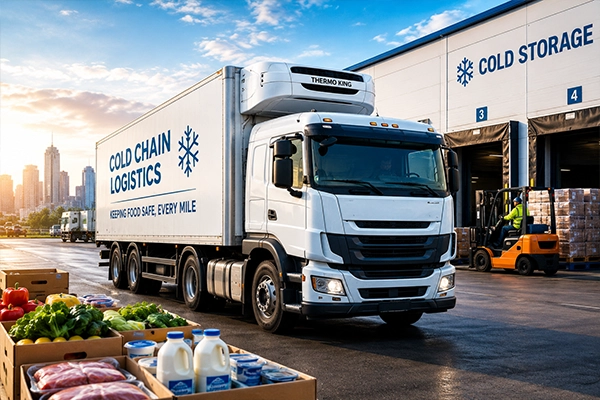
Cold Chain Logistics and Food Safety Transportation
Logistics in the cold chain are very important for keeping food safe from the time it is made until it is eaten. It relies on constant temperature control to keep perishable goods like dairy, meat, fish, and fresh produce fresh, stop them from going bad, and lower the risk of contamination.
Trucking companies are an important part of this system because they transport temperature-sensitive goods over long distances while following strict rules about the environment. Any break in temperature control can lower the quality of food, cost money, and put people’s health at risk.
To keep things consistent, modern cold chain systems need storage sites, transportation companies, and distribution networks to work together. Because of this, trucking is an important part of keeping food safe in both local and foreign supply chains.
Cold Chain Logistics and Food Safety
Temperature-Controlled Transport Systems
The cold chain logistics of transportation rely heavily on temperature-controlled transit systems. These systems depend on refrigerated trucks with cooling units that keep food at exact temperatures that are right for the type of food being moved.
Things that are frozen need temperatures below zero, while fresh food may need slightly higher but stable cooling levels. Trucking companies spend money on cutting edge refrigeration equipment that lets drivers check on and change conditions while the truck is in transit. Insulation is also a big part of keeping heat from outside from affecting goods.
Modern tracking tools help keep goods at the right temperature by always showing what’s going on with it. These tools let you know right away when temperatures go outside of the acceptable ranges, so you can make the necessary changes right away.
For some foreign operations, it’s important for fleets to work together to make sure that cold storage doesn’t stop during transfers. For example, Trucking Companies in Montreal often operate in cross-border logistics routes where maintaining consistent refrigeration is essential for food imports and exports.
Real-Time Monitoring and Data Tracking
Real-time tracking is now an important part of cold chain logistics, which lets trucking companies keep a close eye on conditions that are safe for food. Temperature, humidity, and sometimes even air quality are constantly recorded by sensors inside refrigerated trucks.
This information is sent to central systems so that logistics managers can keep an eye on packages at all times. If any problems are found right away, steps can be taken like rerouting the truck, changing the cooling settings, or setting up emergency checks.
This amount of supervision lowers the chance that food will go bad and makes sure that everyone is responsible during the whole transport process.
Long-term gains in cold chain performance are also helped by keeping track of data. By looking at old shipment data, trucking companies can find trends, like how the temperature changes often on certain routes or how some vehicles keep breaking down.
These new ideas help us plan better and lower the risks of the future. Real-time tracking also makes things clearer for customers, who can check on the state of their goods while they’re in transit.
This makes people more sure that the cold chain works and builds trust between suppliers, distributors, and shipping companies.
Also Read More: Themetta Suggs: Chuck Berry Devoted Wife of 68 Years
Refrigerated Fleet Management Practices
For cold chain logistics to work easily and consistently, there needs to be good management of the refrigerated fleet. Trucking companies have to keep their cars in great shape so that they don’t break down and stop the temperature control.
Maintaining freezer units, insulation systems, and engine parts on a regular basis lowers the chance that they will break down without warning.
Fleet managers also plan regular checks to make sure that safety and efficiency standards are being met. Drivers are taught how to use the controls for refrigeration and how to respond to alerts while the truck is in motion. This makes sure that they can handle sudden changes in conditions.
Optimizing a fleet also means matching the right type of vehicle to the needs of a particular load. Some things need different temperature zones inside the same trailer, while others need the whole compartment to be able to freeze very quickly.
Scheduling that works well makes sure that cars are used efficiently, which cuts down on downtime and costs while keeping products safe. Making sure that maintenance and deployment plans work well together helps keep refrigerated fleets reliable, even when logistics are tough.
Regulatory Compliance in Cold Chain Transport
Food safety standards are tightly governed by national and international rules, so following the rules is an important part of cold chain logistics.
For transporting perishable goods, trucking companies have to follow rules that spell out temperature ranges, handling methods, and hygiene standards.
These rules are meant to keep people from getting sick from food and make sure that quality is the same throughout the supply chain. To be in compliance, you need to keep correct records of temperature, transport conditions, and delivery dates.
Inspection organizations may check that transportation companies are following the rules by doing audits. If these standards aren’t met, penalties, shipments being turned down, or losing working licenses can happen.
Because of this, trucking companies spend money on training programs and digital compliance tools that make it easier to keep records and file reports.
These systems make it easy to quickly get shipment data during checks, which makes the whole logistics process clear and accountable.
Read More Also: Judy Stewart-Merrill: James Stewart Daughter & Her Life
Packaging and Handling for Perishables
Packaging is a very important part of keeping food safe during travel in the cold chain. Using the right materials for packaging helps protect items from changes in temperature and harm.
To keep things stable inside shipping units, things like insulated boxes, gel packs, and thermal wraps are often used. Packaging not only keeps food at the right temperature, but it also keeps different foods from getting contaminated with each other. This is especially important when moving raw and processed goods together.
The way a product is handled is just as important for keeping its identity. When loading and unloading, workers must follow strict hygiene rules, which include using protective gear and following proper sanitation methods.
Careful stacking and placement inside refrigerated trucks makes sure that air flows properly, which helps keep temperatures even. All of these efforts help keep the quality of the product high from where it starts to where it ends up, which cuts down on waste and makes sure that food stays safe to eat.
Route Optimization for Fresh Deliveries
Optimizing routes is an important part of cold chain operations that has a direct effect on the safety of food and the speed of delivery. Advanced mapping and logistics software is used by trucking companies to find the fastest and safest ways to move goods that go bad quickly.
Shorter transit times lower the risk of temperature changes and limit the amount of time that people are exposed to the outside world. When planning paths to make sure deliveries happen on time, traffic patterns, weather, and the state of the roads are all taken into account.
Efficient routing also cuts down on running costs and fuel use while keeping the quality of the product intact. Sometimes, people choose different paths to avoid delays caused by traffic or road closures.
Dispatching teams and drivers work together to make sure that changes can be made right away if something goes wrong. This level of adaptability is necessary to keep the quality of fresh foods high and make sure they get to customers in the best possible shape.
To make sure food is safe from where it is grown to when it is eaten, cold chain processes depend a lot on how well and reliably trucks work.
Trucking companies are very important for keeping fresh goods safe because they use temperature-controlled systems, keep an eye on things in real time, follow the rules, and work together with others in the supply chain. At each step of the shipping process, quality is maintained and risk is reduced.
As technology and logistics systems get better, cold chain transportation becomes even more reliable. This makes it safer to move food between areas and markets and meets the growing demand for fresh goods around the world.


Leave a reply


-
Is Joe Machi Married? The Truth About the Comedian’s Private Life
Joe Machi has probably won you over if you’ve ever seen Last ... -
-
-


