
The Impact of Police Reports on Car Accident Case Outcomes
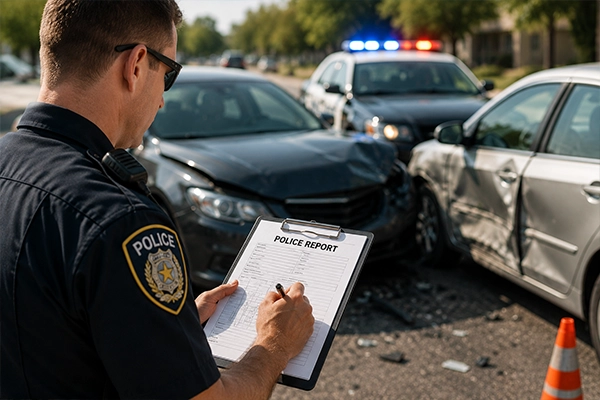
Police reports provide important evidence that can influence insurance claims, settlement negotiations, and legal proceedings after a car accident.
After a car accident, a police record is often the most important thing that helps people figure out who is at fault. It is usually made soon after police arrive at the scene and includes notes, comments, and first impressions.
This record is used by insurance companies, lawyers, and sometimes the courts to help figure out what happened. It’s not always the last word on who is responsible, but it can have a big effect on how a claim grows.
Details are often written down, like the state of the roads, how drivers behave, and what witnesses say. This means that the report can affect talks about settlements, deals, and even court cases where there are disagreements about who is at fault and who should pay.
Why Police Reports Matter in Claims
How Police Reports Shape Initial Liability Decisions
Police reports are often the first organized record of an accident scene. This early paperwork can affect how insurers and lawyers first judge who is responsible.
Officers usually write down what drivers, passengers, and witnesses say, as well as any obvious evidence, like where the cars are, skid marks, and the weather. These observations help build a story that could later affect talks about a settlement or court processes.
Often, the report includes an officer’s initial thoughts on the factors that led to the accident, which can be very important when the claim is first being looked at.
Even though it’s not usually required by law, it can still help figure out who is responsible. When there are different stories of a collision, this document can be used to clear up any confusion and get a general idea of what happened.
More like: Maria Aquinar: Life, Career, and Key Contributions
Influence on Insurance Company Assessments
Police records are often used by insurance companies to figure out how to handle claims and who is at fault. The organized data in these reports helps adjusters check what drivers say and see if it matches up with physical proof.
In many car accidents, conflicting accounts are common, and the report can provide an independent perspective to help resolve discrepancies.
Adjusters might use details like tickets, broken driving laws, or what the police saw to back up their conclusions. Even though insurance companies do their own investigations, the police record is often very important in the early stages of the process.
It can speed up or slow down the process of a claim and change whether liability is accepted or contested. If more proof is presented later, the fact that the report was used at first can still affect the way negotiations and settlement talks go.
Role in Establishing Fault Disputes
When people disagree about who caused an accident, police records can be used as a main reference. A lot of the time, they have diagrams, written descriptions, and recorded comments that help figure out what happened.
When each driver gives a different account of what happened, these factors become even more important. Lawyers can look over the report to find errors or to back up their clients’ stories.
But police officers don’t usually see the crashes happen, so they have to use the information that is at the scene to come to their conclusions. In more complicated cases, this can sometimes lead to different conclusions.
Still, courts and insurance adjusters often use the report as a starting point when deciding who is at fault, especially when physical proof matches what the officer wrote down.
More Click: Karen Czuchry: The Private Sister Behind Matt Czuchry Fame
Impact on Settlement Negotiations
The information in a police report is often used to shape settlement talks because it gives people a quick way to judge risk. When one party is named as possibly being guilty, that can change the bargaining positions of the other parties.
Lawyers may use the report’s positive results to make their claims for compensation stronger, while insurers may use vague or neutral language to lower their risk of being sued. Citations or records of driving violations can also change what people think the case is worth.
Even though the report doesn’t decide all settlements, it is often used as a guide during talks. Its effect can either speed up agreement when it’s clear who is responsible or slow down talks when different readings are needed. Because of this, the report is often part of the strategic thinking that both sides use.
Courtroom Use and Legal Weight
Reports from the police are often used as supporting proof in court, though their admissibility and weight can change from place to place. Judges and lawyers can look at them to get a sense of what the cop saw and how he or she first thought about the scene.
However, because police officers usually rely on second-hand accounts, these reports can be questioned through cross-examination or the presentation of counter-evidence.
Even though they have this flaw, they can still be useful for setting the scene, especially when physical proof or witness statements match what was written.
They are often used by lawyers to point out inconsistencies or make their cases about who is at fault stronger. Even though they aren’t always enough to decide a case on their own, police records can add to the body of evidence that judges use to make decisions in cases where liability is in question.
Limitations and Potential Inaccuracies
Even though police records are very important, they can have mistakes or be limited in some way. When police officers appear after the fact, they have to piece together what happened using the information they have.
This can cause conclusions to be incomplete or even wrong, especially when there aren’t many witnesses or the physical proof isn’t clear. The report might not be accurate if the driver’s words or the surroundings are misunderstood. Also, stress at the scene can make it easy to forget to write down important details or leave out important information.
Because of these things, lawyers usually only look at the report as one piece of proof and not as the whole story. There is usually more research that needs to be done after finding differences to get a better idea of how the event happened.
Interaction with Witness Statements and Evidence
Police reports are a type of mixed source of information because they often include both witness statements and physical proof. Witness reports can help make sense of what happened, especially when drivers give different versions of what happened.
Police may take these statements at the scene of the crime while people are still remembering them clearly, which can make them more reliable.
Physical evidence, like the paths of litter, road markings, and damage to vehicles, is also recorded to help with the reconstruction process. But how this information is interpreted can change based on the officer’s background and point of view.
In the future, legal teams may compare these details with other proof, like surveillance footage or analysis from experts. Putting together information from several different sources helps build a fuller picture, but differences can still show up and need to be looked into more during the claim settlement process.
Police records are very important to the outcome of car accident claims because they give a clear picture of what happened right away. They have an effect on insurance reviews, settlement talks, and court cases by writing down their notes and first impressions.
Even though they aren’t proof of guilt for sure, they often help shape how cases go in their early stages. They help put facts in order and give context, which is especially useful when different stories are given.
But because they have flaws and could be wrong, they need to be looked at along with other proof.

Leave a reply


-
Is Joe Machi Married? The Truth About the Comedian’s Private Life
Joe Machi has probably won you over if you’ve ever seen Last ... -
-
-


